
How to Properly Recycle Glass: A 2026 UK Guide
Table of Contents
- What You'll Need to Prepare Your Glass
- How to Prepare Glass for Recycling
- What Glass Cannot Be Recycled
- Common Mistakes to Avoid When You Recycle Glass
- Upcycling Gin Bottles: Creative Ideas for Your Home
- What Happens to Your Glass After Collection
- Conclusion
- Frequently Asked Questions
Last Updated: September 29, 2026
What You'll Need to Prepare Your Glass
Learning how to properly recycle glass starts with a simple truth: most people get it wrong before the bottle even leaves the kitchen. This guide from Glaswegin breaks down exactly what to do.
Glass is one of the most recyclable materials on the planet. It can be melted down and reshaped again and again without losing quality. But the wrong items in the wrong bin can ruin a whole load.
Here's what you need before you start:
- A dedicated tub or bag for glass only
- A quick rinse under the tap
- A safe spot to store glass until collection day
- A local council recycling guide (check your council's website)
That's it. No fancy equipment. No special cleaning products.
A common mistake is treating the recycling bin like a general waste bin. It isn't. Glass recycling works best when the glass is clean, empty, and separated from other materials.
How to Prepare Glass for Recycling
Preparing glass for recycling takes about 30 seconds per item. Rinse it, remove the lid, and place it loose in your recycling container.
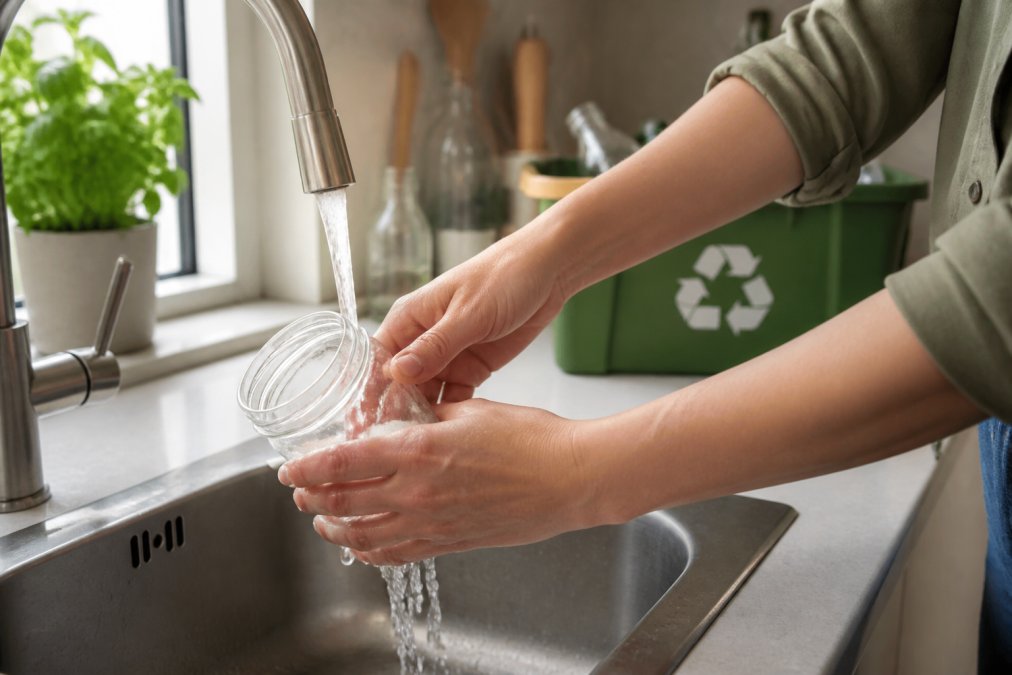
Follow these steps:
- Empty any liquid or food residue
- Rinse with cold water (hot water wastes energy)
- Remove caps, lids, and corks
- Peel off large labels if they come away easily
- Place the glass loose in your bin, not in a bag
Don't worry about small paper labels. They burn off during processing. Don't stress about perfect cleanliness either. A quick rinse is enough.
Many councils ask you to separate glass by colour. Check your local rules before collection day.
What Glass Cannot Be Recycled
Not all glass belongs in your kerbside recycling. The wrong items can contaminate a whole load and send it to landfill.
Here's what to leave out:
| Item | Why It Can't Be Recycled | What To Do Instead |
|---|---|---|
| Pyrex and ovenware | Melts at a different temperature | Donate or reuse |
| Mirrors | Coated with reflective film | Take to a household waste centre |
| Window glass | Treated and often too thick | Check with your local tip |
| Light bulbs | Contain metal parts and coatings | Recycle at a dedicated point |
| Drinking glasses | Different melting point to bottles | Donate if usable |
| Nail varnish bottles | Contain mixed materials | General waste |
The rule is simple: if it isn't a bottle or jar, don't put it in the glass bin.
Common Mistakes to Avoid When You Recycle Glass
Most recycling failures come down to a handful of repeated errors. Fix these and your bin will pass inspection every time.
The biggest mistake is bagging your glass. Sorters can't see through bags, so they pull them out. Loose glass gets sorted properly.
Other frequent errors:
- Leaving lids on bottles
- Putting broken glass in loose (wrap it first)
- Mixing in ceramics or crockery
- Rinsing with hot water and wasting energy
- Forgetting to check your council's colour rules
Broken glass is a real safety risk for collection crews. Wrap it in newspaper and place it in your general waste, not the recycling bin.
A common mistake is assuming all glass is equal. It isn't. Bottles and jars are made to a standard that makes them easy to melt down. Everything else is a problem.
Upcycling Gin Bottles: Creative Ideas for Your Home
Upcycling gin bottles keeps them out of the waste stream entirely. It's the most sustainable option of all.
At Glaswegin, our bottles are designed with this in mind. The minimalistic shape makes them easy to reuse rather than discard.
Here are some ideas that actually work:
- Table lamp: Drill a hole, thread a cable, add a shade
- Soap dispenser: Fit a pump top to the neck
- Vase: Remove the label and add fresh flowers
- Candle holder: Cut the bottle and smooth the edge
- Water carafe: Clean thoroughly and use at the table
One customer turned their bottle into a table lamp. Another uses theirs as a soap dispenser in the kitchen. The design holds up because it's simple.
Glaswegin also offers refill pouches. You keep the bottle and top it up, which cuts packaging waste and saves you money over time.
What Happens to Your Glass After Collection
Your glass goes on a longer trip than you might think. Once collected, it heads to a processing plant for sorting.
The journey looks like this:
- Collection crews pick up your bin
- Glass is taken to a materials recovery facility
- It's sorted by colour, often by machine
- Contaminants like lids and ceramics are removed
- Glass is crushed into small pieces called cullet
- Cullet is melted in a furnace at very high heat
- New bottles and jars are formed from the melted glass
The guidance from WRAP on glass recycling explains how this closed-loop system works in practice. The Environment Agency's waste guidance sets out the rules councils and processors must follow.
Recycled glass melts at a lower temperature than raw materials. That saves energy and cuts carbon emissions. Every bottle you recycle properly helps that process run smoothly.
Conclusion
Getting glass recycling right takes seconds, but the impact lasts. Rinse it, remove the lid, and keep it loose. Skip the Pyrex and the mirrors.
Better still, reuse what you can. A bottle that becomes a lamp never enters the waste stream at all.
At Glaswegin, we've built our range around this idea. Our bottles are made to be refilled with our pouches, upcycled into something new, or recycled cleanly when you're done. Customers tell us the bottle design is part of the appeal. One called it "a lovely bottle that can be re-filled" and noted it can become "a funky table lamp."
Shop the Glaswegin range and choose a bottle worth keeping.
Frequently Asked Questions
Do I need to remove labels before recycling glass bottles?
You don't need to remove labels. The recycling process heats glass to high temperatures, which burns off paper labels and adhesives. However, if a label is easy to peel off, removing it can help improve the quality of the recycled glass. The most important step is to rinse the bottle so no food or liquid residue remains.
Can I put broken glass in my household recycling bin?
No. Broken glass should never go in your household recycling bin. It poses a safety risk to collection workers and can contaminate other recyclables. Instead, wrap broken glass safely in newspaper or thick paper, place it in a sturdy cardboard box, and put it in your general waste bin. Check with your local council for specific guidance on disposing of broken glass.
Why can't I recycle Pyrex or drinking glasses with bottles?
Pyrex, drinking glasses, and window glass have different chemical compositions and melting points than bottle and jar glass. Mixing them with container glass can weaken new glass products and cause defects. These items should go in your general waste bin or be taken to a household waste recycling centre if accepted. Always check your local council's rules for these materials.
Should I rinse glass jars before putting them in the recycling?
Yes, rinsing glass jars is important. A quick rinse removes food residue that can attract pests, create odours, and contaminate other recyclables like paper and cardboard. You don't need to scrub them perfectly clean or use hot water; a brief rinse with cold water is enough. Let them drain before placing them in your recycling bin.