
Best Scottish Gin Brands: A 2026 Guide to Scottish Gin
Table of Contents
- What Makes Scottish Gin Different
- Scottish Gin Botanicals: What Goes Into the Bottle
- The Best Scottish Gin Brands to Try in 2026
- How to Serve Scottish Gin
- Miniatures and Gift Sets for Gin Lovers
- Refillable and Sustainable Scottish Gin Options
- Frequently Asked Questions
Last Updated: October 2, 2026
What Makes Scottish Gin Different
Scottish gin is a London Dry-style spirit developed, distilled and bottled in Scotland, typically built around a juniper-forward base with locally sourced botanicals that give it a distinct regional character. The category has grown quickly over the past decade, and the best Scottish gin brands are now judged on craft, provenance and consistency rather than novelty alone.
What most guides get wrong is treating "Scottish" as a marketing label. It isn't. A gin earns the description through where it is made and what goes into it. The Scotch Whisky Association guidance on spirit production sets the tone for how seriously this part of the world treats distilled spirit provenance, and gin makers follow a similar discipline.
The practical difference shows up in the glass. Scottish gin tends to favour a clean, juniper-led profile with a soft finish, rather than the heavy sweetness found in some flavoured spirits. That balance is why it works equally well in a simple G&T or a stirred cocktail.
Scottish Gin Botanicals: What Goes Into the Bottle
Scottish gin botanicals are the flavour-building ingredients steeped or vapour-infused during distillation, and they usually combine classic juniper with locally foraged or grown elements. Juniper is the one non-negotiable: without it, the spirit legally cannot be called gin. Everything else is where a distiller's character comes through.
A common approach is to anchor a recipe with Italian juniper, coriander and angelica, then add something regional for identity. Glaswegin, for example, blends eight botanicals including milk thistle, orange flower, bay leaf, chamomile and pink peppercorn. The milk thistle is the local touch, and it rounds out the finish.
Here's how the main botanical groups shape a Scottish gin:
| Botanical Group | Role in the Gin | Typical Examples |
|---|---|---|
| Juniper | Core pine flavour, legal requirement | Italian juniper |
| Citrus | Freshness and top notes | Lime, lemon peel, orange flower |
| Root and seed | Structure and body | Coriander, angelica |
| Floral | Complexity and aroma | Chamomile, cherry blossom |
| Spice | Warmth and finish | Pink peppercorn, chilli |
The thing nobody tells you about botanicals is that quantity matters less than balance. A recipe with eight well-matched ingredients will out-drink one with twenty that fight each other.
The Best Scottish Gin Brands to Try in 2026
Below are some bottles worth your attention this year, led by the range we make ourselves in Glasgow.
Glaswegin Original Gin 70cl
Our flagship, and the bottle to start with. Glaswegin Original is a London Dry Gin bottled at 41.1% ABV and crowned Scotland's Best London Dry Gin at the 2021 World Gin Awards. It blends eight globally sourced botanicals, with milk thistle and pink peppercorn giving it a finish smooth enough to drink with or without garnish. Strong juniper and lime lead, with delicate orange flower behind. At £39.00 for 70cl, it is the benchmark for the range. Serve it with premium tonic, slices of green apple and a sprig of mint.
Glaswegin Raspberry & Rhubarb Gin 70cl
Our first flavoured release, and still the most popular. Raspberry and rhubarb are added to the signature eight-botanical blend for an uncompromisingly fruity taste, made with 100% natural ingredients and bottled at 37.5% ABV. Expect warm raspberry jam and candied rhubarb on the nose, creamy vanilla notes, then a crisp orange flower and lemon peel finish with a pink peppercorn tingle. It's £37.50 for 70cl, and it works just as well with ginger ale or premium lemonade as it does with tonic.

Glaswegin Tequila Cask Gin
This is the one for drinkers who want something genuinely different. A limited edition rested in a reposado tequila cask, with only 250 bottles released. Cracked black pepper, sandalwood, nutmeg and fennel lead to a herbaceous finish of pine, dill and coriander. Bottled at 41.1% ABV and priced at £45.00, it is best served with equal parts gin to tonic and a slice of lime, or in a Last Word cocktail.
Glaswegin Weegie Strength Gin
Our take on a navy strength gin, bottled at 55.8% ABV and priced at £45.00. The higher alcohol content captures more flavour than a standard-proof spirit, so it stays full-bodied while remaining smooth enough to blend in cocktails. It works as a sipper too. If you like a gin that holds its own against a strong mixer, this is the one.
McQueens Cherry Blossom Gin 50cl and McQueens Five Chilli Gin 70cl
Two limited expressions under the McQueens name, both at £25.00. Cherry Blossom is a delicate gin bottled in a limited edition keepsake ceramic bottle, ideal if you want something that looks as good on the shelf as it tastes. Five Chilli is the opposite end of the spectrum: a blend of Ghost Pepper, Carolina Reaper, Guajillo, Scorpion and Orange Habanero that delivers a warming sensation on the palate. One for the adventurous.
How to Serve Scottish Gin
Serve Scottish gin with a premium tonic in a balloon glass over plenty of ice, then add a garnish that echoes the botanicals in the bottle. That single rule covers most of the range. The mistake most people make is under-icing the glass: a warm G&T flattens the aromatics before you taste them.
Match the garnish to the gin rather than defaulting to lime:
- Juniper-led gins: green apple and mint
- Fruity gins: fresh raspberry and mint, or ginger ale
- Cask-aged gins: a slice of lime, or a Last Word cocktail
- High-strength gins: a generous measure over ice with a light tonic
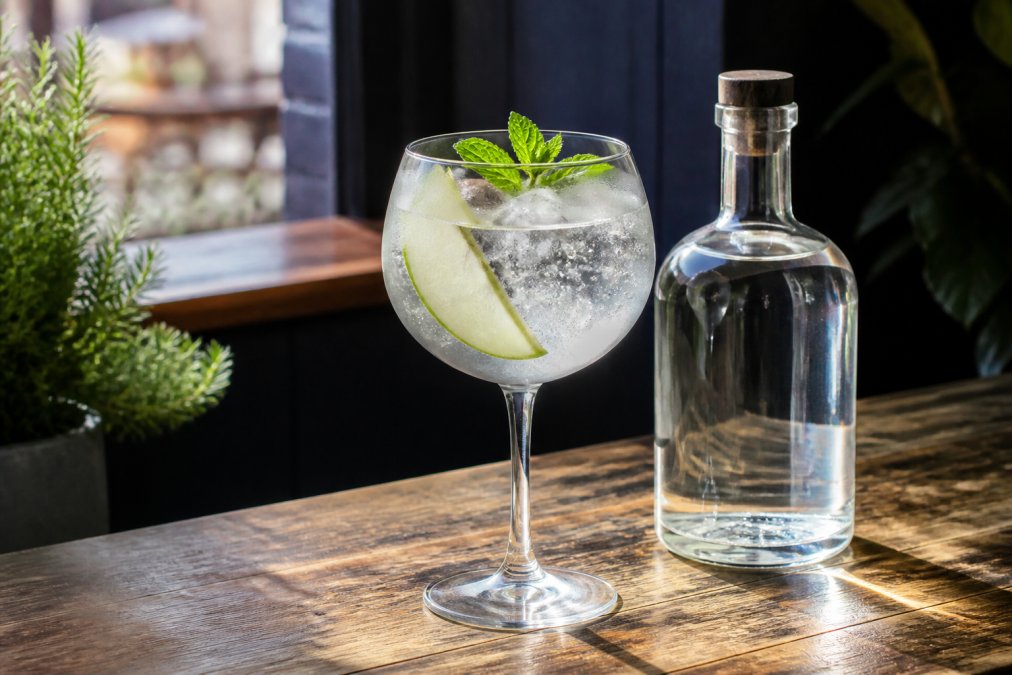
If you're coming from a sweeter flavoured spirit, expect a drier first sip. Scottish gin rewards a slower measure. The Food Standards Agency guidance on alcohol labelling is worth a read if you want to understand what the ABV figures on the label actually tell you.
Miniatures and Gift Sets for Gin Lovers
Miniatures solve a common problem in buying gin as a gift: you can't taste it before you buy it online. A 5cl bottle lets the recipient try the range before committing to a full 70cl. Every miniature in the Glaswegin range is priced at £5.50, which makes a mixed set an affordable way to cover several flavour profiles at once.

They also work well beyond gifting. Couples use them as table settings and wedding favours, and the collectable bottles look deliberate on a bar cart rather than out of place.
Refillable and Sustainable Scottish Gin Options
Refill pouches are the practical answer to the packaging problem in premium spirits. Rather than buying a new glass bottle every time, you keep the original bottle and top it up from a refill pouch, which uses far less packaging per measure. Glaswegin offers refill pouches alongside its bottles, and the bottles themselves can be up-cycled into items like table lamps once empty.
The honest caveat: refills only make sense if you already own the bottle. If you're buying your first Glaswegin, start with the 70cl and add refills from your second order onward. That's when the saving and the reduced packaging both kick in.
What most reviews miss is that the bottle design is doing double duty here. It's minimal enough to leave on display, sturdy enough to refill repeatedly, and designed to be repurposed rather than binned. Customers regularly mention this: one reviewer noted that the bottle "can even be recycled into a funky table lamp."
The real challenge with Scottish gin isn't finding a bottle, it's finding one that delivers on flavour, provenance and packaging without compromise. Glaswegin distils and bottles its range in Glasgow, offers refill pouches to cut packaging waste, and designs bottles meant to be refilled or up-cycled rather than discarded.
Frequently Asked Questions
What makes Scottish gin different from other gins?
Scottish gin is defined by where it is made and often by the botanicals grown locally. Distilleries in Scotland frequently use native ingredients such as milk thistle, heather and pink peppercorn alongside imported juniper. The result is a style that leans on local character rather than a single fixed recipe. Scottish gin can be London Dry, cask-aged, flavoured or navy strength, so the category covers a wide range of flavour profiles rather than one narrow taste.
What botanicals are commonly used in Scottish gin?
Juniper is the one botanical every gin must contain, and Scottish producers typically pair it with coriander, angelica, orange flower, bay leaf, chamomile and pink peppercorn. Milk thistle is a distinctive Scottish addition, sourced locally and used to round out the finish. Some distilleries add heather, sea buckthorn or local berries for a sense of place. The exact blend is what separates one Scottish gin from another, even when the base spirit is similar.
How do you serve Scottish gin?
Serve Scottish gin with a premium tonic in a balloon glass over plenty of ice. For a London Dry style, slices of green apple and a sprig of mint work well. A raspberry and rhubarb gin suits fresh raspberry and mint, or ginger ale if you prefer less sweetness. Cask-aged or navy strength gins can be sipped neat or used in cocktails such as a Last Word. Match the garnish to the botanicals rather than defaulting to lime.
Are Scottish gin brands worth the price?
Small-batch Scottish gins typically cost more than mass-produced supermarket bottles because production runs are smaller and botanicals are often sourced individually. Prices for a 70cl bottle usually sit between £25 and £45. The difference shows in the depth of flavour and the smoothness of the finish. If you drink gin regularly, buying a bottle you enjoy rather than the cheapest option tends to work out better value over time.